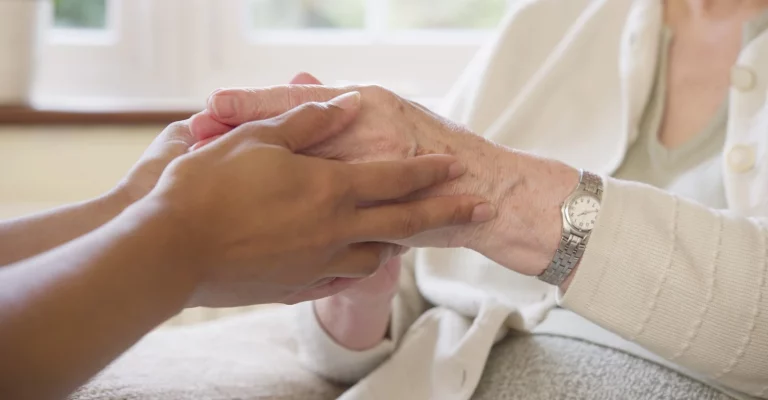
When someone you love is already living with Alzheimer’s disease, awareness can mean something very different.
Your family probably does not need another November article explaining that Alzheimer’s affects memory. You may already be living with the changes that are harder to summarize: repeating conversations, worrying about leaving someone alone, taking over responsibilities they once handled independently or watching your relationship with a parent or spouse gradually change.
November is National Alzheimer’s Disease Awareness Month. For Chicago families already living with a diagnosis, it is a good opportunity to focus on something equally important: finding support for the people surrounding the person with Alzheimer’s.
Alzheimer’s Affects a Family, Not Just One Person
Caregiving responsibilities rarely stay exactly the same. A loved one who initially needs reminders or help getting to appointments may eventually require assistance with medications, meals, bathing, dressing or staying safe at home.
Family members change alongside those needs. A spouse may gradually become a full time caregiver. An adult child may find themselves balancing their own children and career with increasing responsibilities for a parent. Siblings may struggle to determine who should handle what.
A Chicago Resource Worth Knowing: Lorenzo’s House
Lorenzo’s House is a Chicago founded organization with a particularly meaningful mission for families affected by younger onset dementia, which refers to dementia symptoms beginning before age 65. Its founder, Diana Shulla Cose, created the organization after her husband, Lorenzo, was diagnosed with younger onset Alzheimer’s while their sons were still young.
That experience shaped an organization built around an aspect of dementia care that can sometimes be overlooked: the family needs support too.
Lorenzo’s House provides free programs for sons, daughters, children, spouses and care partners affected by younger onset dementia. Its programs include MATCH, which connects people one on one with someone who understands the experience, as well as virtual CLUBS designed for different family members and age groups. A trained volunteer with lived experience, called a Lighthouse, can also serve as an initial connection for a family looking for support.
For families dealing with younger onset Alzheimer’s in particular, having a resource built around their circumstances can matter. A person developing dementia in their 50s or early 60s may still be working, supporting a family or raising children. The questions facing that household can be very different from those facing a family whose parent develops dementia much later in life.
When Support at Home Is No Longer Enough
Community resources and caregiver support can make the journey less isolating, but there may also come a point when a loved one needs more care than a family can safely or realistically provide at home.
Sometimes there is an obvious event, such as a hospitalization or a dangerous incident at home. More often, the change is gradual. Mom begins wandering. Dad needs supervision throughout the night. A spouse who has been providing care realizes they can no longer safely help with bathing or transfers. Adult children begin rotating schedules just to make sure someone is always there.
Recognizing that the current arrangement is no longer working is not a failure on the family’s part. Alzheimer’s is progressive, and care needs can eventually exceed what even a deeply committed family can provide.
This is where Senior Living Specialists Chicago can help.
Our role is different from organizations providing caregiver support and education. When a family reaches the point of considering full time care, memory care or another senior living option, we help families understand what is available and identify communities that fit their loved one’s needs.
We know the Chicago senior living landscape, and we also understand that choosing memory care is about much more than finding an available room. Families may need to consider the level of dementia support, safety measures, staffing, location, budget and the environment where their loved one will spend each day.
National Alzheimer’s Disease Awareness Month is a reminder that families deserve support throughout this journey, not only at the moment of diagnosis. Resources such as Lorenzo’s House can help families find understanding and connection, while Senior Living Specialists Chicago can step in when the conversation shifts toward finding the right setting for ongoing care.