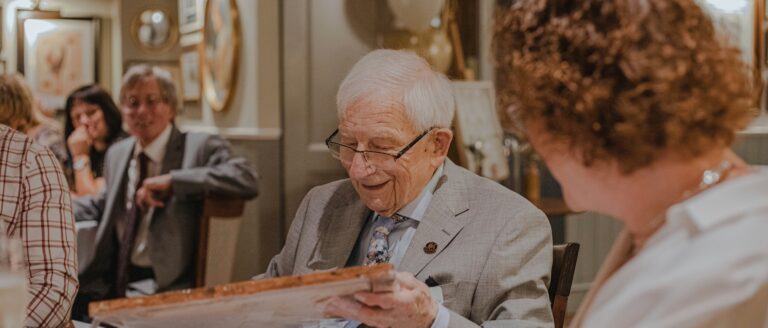
Your mom forgot your name yesterday, but she still lights up when Frank Sinatra comes on. Your dad can’t remember breakfast, but ask him about the ’85 Bears and he’ll give you the starting defense.
Yes, memory loss steals the details, but it can’t erase who they are.
And many Chicago memory care communities are waking up to this reality.
Instead of the cookie-cutter, institutionalized approach, many are embracing programs, solutions, and innovations that focus on reaching the person underneath the diagnosis by tapping into muscle memories, lifelong loves, and everything that made them who they’ve always been.
Your loved one is still in there, shaped by decades of passions and stories that dementia will never touch.
Mail-Delivered Art Therapy Kits: UChicago’s “Art Is…In” Program
Chicago Memory care innovation doesn’t always have to happen inside community walls, and the University of Chicago Medicine’s “Art Is…In” program proves it by mailing meaningful moments directly to families dealing with dementia.
Each art therapy kit arrives packed with painting supplies, collage materials, prints of famous artwork, and conversation prompts to unlock memories that medications can’t reach. Over 4,000 families nationwide have opened these packages, and caregivers consistently report that working on projects together sparks conversations that haven’t happened in months. UChicago social workers also document noticeable mood improvements after families use the kits.
In other words, your loved one might struggle to remember yesterday, but their hands still know how to hold a paintbrush.
Best of all, the program costs nothing.
Music Therapy Sessions
Since 2023, Chicago memory care specialists at UChicago Medicine Memory Center have brought board-certified music therapists directly into homes and communities for weekly one-on-one sessions with dementia patients.
The results speak volumes. One Chicago man with frontotemporal dementia picked up his old trumpet during a session and sang jazz tunes with infectious joy. His family called it “his best hour of the week.” And it makes sense why. Dr. James Mastrianni, director of UChicago’s Memory Center, explains that music therapy taps into brain areas that disease can’t touch, triggering happy memories and genuine smiles.
Many memory centers still don’t offer music therapy, but signs show these sessions improve alertness, reduce anxiety, and give residents and caregivers a powerful new way to connect.
After all, music is the universal language.
Virtual Reality Empathy Training
While music opens up memories, virtual reality unlocks understanding and empathy. Many Chicago memory care programs now use VR headsets to show caregivers what dementia feels like from the inside out.
Strap on the headset, and suddenly you’re trying to walk through a familiar room through the fog of confusion and fear. One Chicago daughter even discovered why her father found their patterned living room rug terrifying, because through his eyes, it looked like “a gaping hole” ready to swallow him.
A multi-year Stanford University study across 16 care communities found that nine out of 10 caregivers said VR training improved their relationship with the person living with dementia. Families learn why their loved one refuses to shower or becomes agitated in crowded spaces. Staff members understand why gentle redirection works better than correction. And everyone involved discovers how to communicate with patience instead of frustration, to calm everyone’s stress, and to create calmer environments where connection becomes possible again.
Sensory Gardens & Horticultural Therapy
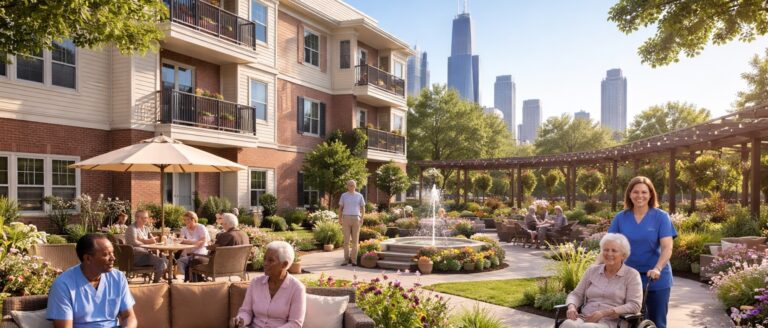
Many Chicago memory care communities have also figured out that sometimes the best therapy comes from getting your hands dirty—literally. Sensory gardens and horticultural programs are helping residents in ways that traditional therapies or medicine can’t.
Take Chicago Methodist Senior Services, which teamed up with Rush University to build an Urban Sensory Garden at Wesley Place. They have raised beds packed with lavender, rosemary, peppermint, and vegetables that residents can touch, smell, and work with.
The whole program was based on rural “Memory Farm” ideas, and the thinking is pretty simple: your hands remember how to plant seeds even when your mind starts to go. Staff regularly see this happen with memory-impaired residents, especially those who have been lifelong gardeners. They might not remember breakfast, but will suddenly come alive with excitement and fond memories while watering tomatoes or crushing herbs between their fingers as if no time had passed.
Animal-Assisted (Pet) Therapy
Gardens connect residents to nature, but some Chicago memory care communities add something even better: furry therapists who work for belly rubs and treats.
The Hinsdale Humane Society runs “Therapaws” programs throughout Chicago and western suburbs, bringing trained therapy dogs, cats, rabbits, and birds directly into memory care facilities. Volunteers guide their gentle animals through common rooms and individual visits, work to reduce loneliness and boredom, and naturally encourage memories to bubble up.
Residents who sit quietly all day suddenly perk up when a therapy dog settles beside their chair. Petting a cat soothes agitation better than medication sometimes can. And many patients start sharing stories about their own beloved pets from years past.
Research backs up what staff see daily, too: animal visits genuinely lower anxiety and improve mood, making this time-tested approach as valuable as any other cutting-edge innovation for modern Chicago memory care.
Finding Your Family’s Perfect Chicago Memory Care Fit
Chicago memory care communities finally figured out something important: your loved one is still your loved one, just with a disease that makes life more complicated. The programs and innovations that work succeed because they’re person-centered instead of cookie-cutter and institutional, and tap into who your loved one has always been. No dementia will ever change that.
At Senior Living Specialists Chicago, we know exactly which communities embrace this person-centered approach and philosophy, instead of operating like medical facilities. We help families discover memory care options that celebrate who your loved one has always been while providing the support they need now. We arrange tours, break down pricing, help you understand what VA benefits might cover, and connect you with services like downsizing help. Most importantly, you pay nothing for our guidance because we believe finding the right fit should feel like hope, not homework.
Ready to explore communities that get it right? Contact us today and let’s find the perfect match for your family.